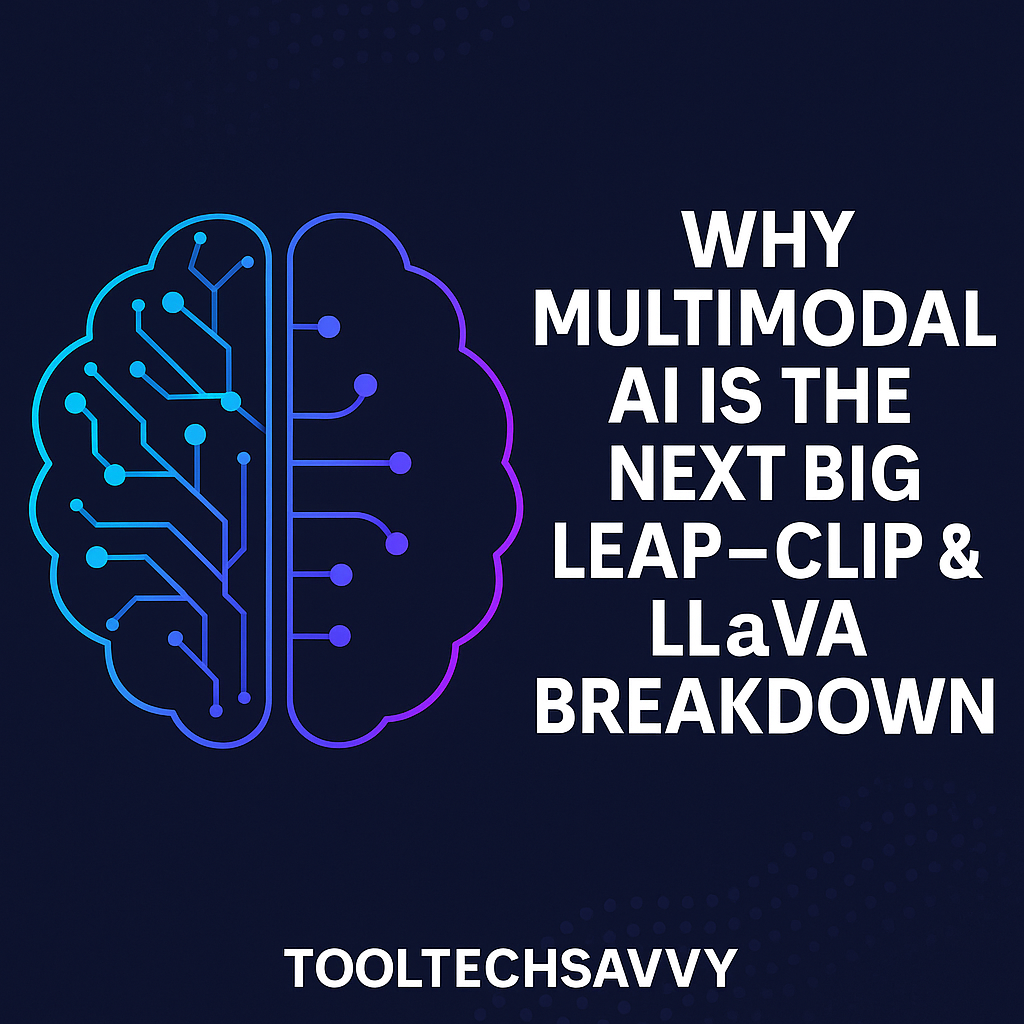
For years, AI systems treated text and images as separate worlds. Text models could read. Vision models could see. But neither could understand both at once. That changed with the emergence of vision-language models—powerful multimodal systems like CLIP, LLaVA, and today’s increasingly intelligent all-in-one AI models.
These new systems can analyze an image, interpret its meaning, and respond using natural language. They bridge perception and reasoning—unlocking new possibilities for creators, developers, analysts, and everyday users.
This shift mirrors the broader evolution toward multimodal, agentic AI described in:
Let’s explore how CLIP and LLaVA work, what makes multimodal AI so transformative, and how you can use these systems to supercharge your workflows.
What Are Vision-Language Models?
Vision-language models (VLMs) are AI systems trained to connect images with text. Unlike traditional models, they can:
- identify objects in images
- interpret scenes
- describe visual details
- answer questions about images
- perform classifications
- match images to text descriptions
In short:
🧠 They “see” and “read” at the same time.
This is foundational for modern AI tools—from search engines to productivity apps.
For those new to AI concepts, you may also like:
CLIP: The Model That Started the Vision-Language Wave
Developed by OpenAI, CLIP (Contrastive Language-Image Pre-training) is one of the earliest and most influential VLMs.
How CLIP Works
CLIP is trained on 400 million image-text pairs pulled from the internet.
It learns to:
- link visual features with words
- associate concepts with patterns
- compare images and text embeddings
This architecture enables it to perform tasks zero-shot, without extra training—similar to the zero-shot principles explored in:
Zero-Shot vs Few-Shot Benchmarks
Real-World Uses
- Content moderation
- Image search
- Visual similarity detection
- Logo and product recognition
- Creative tools (e.g., diffusion models)
CLIP became the backbone for many modern AI art systems and multimodal assistants.
LLaVA: Multimodal Reasoning for Real-World Use
While CLIP excels at classification, LLaVA (Large Language and Vision Assistant) brings full conversational reasoning.
How LLaVA Works
LLaVA combines:
- a vision encoder (like CLIP)
- a powerful language model
- a multimodal projection layer
This means it can see an image and explain it with advanced reasoning—similar to how humans process information.
What LLaVA Can Do
- Describe complex scenes
- Analyze diagrams and charts
- Interpret handwritten notes
- Explain UI screenshots
- Generate instructions from images
- Provide step-by-step guidance
It feels like a visual ChatGPT—especially powerful for workflows like documentation, education, and troubleshooting.
Compare this with text-only reasoning in models used in:
Why Multimodal AI Matters
The shift to multimodal AI is as big as the move from mobile to smartphone.
1. Better Understanding of Real-World Context
Images + text = deeper reasoning.
Great for workflows explained in:
Notion + Zapier + ChatGPT Workflow
2. More Natural Interactions
You can show AI what you see, not just describe it.
3. Higher Accuracy for Complex Tasks
Charts, dashboards, UI screens, documents—multimodal AI handles them all.
4. Faster Problem Solving
Explain this screenshot. Debug this error. Analyze this wireframe.
Multimodal AI reduces friction and speeds execution.
5. Foundation for AI Agents
Agents need perception + reasoning.
See:
Prompting for Autonomy
Multimodal AI Use Cases
Coding Assistance with Visual Inputs
Upload screenshots of errors, architecture diagrams, or UI components.
Pair this with:
Vibe Coding Explained
Document Understanding
Scan PDFs, handwritten notes, tables, images.
Great for:
NotebookLM Deep Dive
Creative Workflows
Storyboarding, concept feedback, idea exploration.
E-commerce Automation
Tag products, classify photos, detect attributes.
Productivity & Automation
Screenshots of dashboards → actionable insights.
This aligns with:
How to Automate Workflows with Make.com
CLIP vs LLaVA: Quick Comparison
| Feature | CLIP | LLaVA |
|---|---|---|
| Purpose | Image-text alignment | Full multimodal reasoning |
| Strength | Classification & embeddings | Conversational analysis |
| Ideal For | Search, ranking, tagging | Explanations, Q&A, workflows |
| Output Type | Scores, labels | Natural language |
The Future: Fully Multimodal AI Assistants
We’re moving toward AI that can:
- read text
- see images
- hear audio
- analyze video
- interact with apps
- run autonomous tasks
This is the future of agentic AI explored in:
AI Teammates in 2025
and
How to Adopt the Agentic AI Mindset
Multimodal models are the bridge to that future.
Final Takeaway
Vision-language models like CLIP and LLaVA are not just technical breakthroughs—they’re practical tools reshaping real-world productivity. By combining perception and reasoning, they open the door to smarter workflows, richer insights, and more intuitive AI assistants.
As AI evolves, multimodal capabilities will become the default—not the exception.