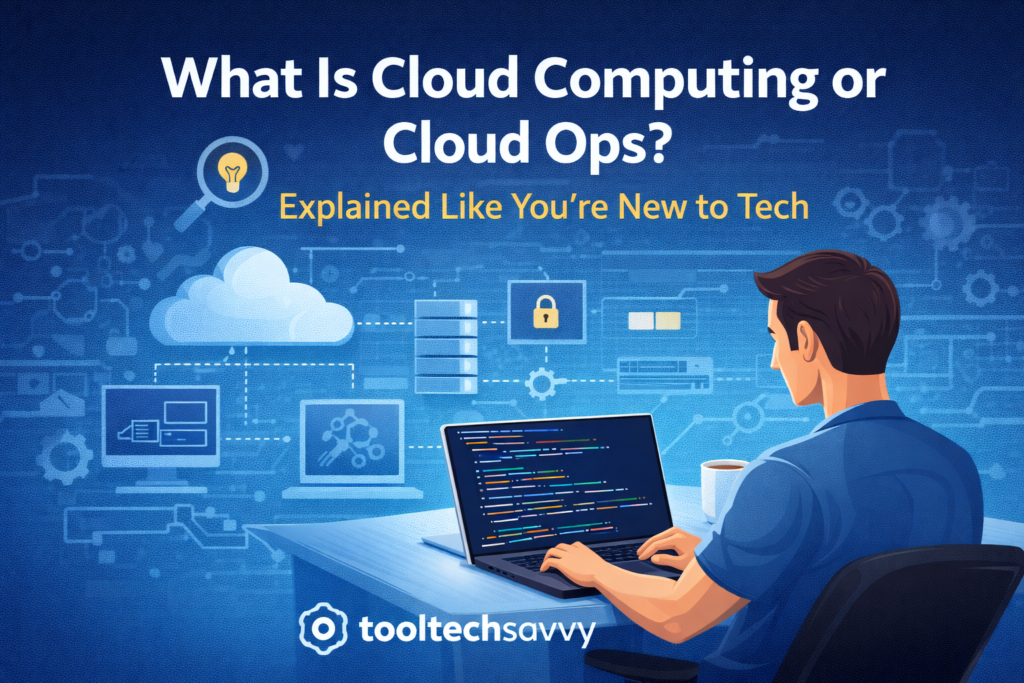
Cloud computing is one of the most commonly used terms in modern technology — and one of the most misunderstood. If you’re new to tech, phrases like cloud ops, AWS, or infrastructure can feel abstract and intimidating.
This guide explains cloud computing in plain language, without buzzwords, so you can understand what it really is and why it plays such a critical role in today’s software industry.
What Is Cloud Computing?
Cloud computing means using computing resources over the internet instead of owning physical hardware.
Instead of buying servers, storage devices, or networking equipment, companies rent these resources from cloud providers and access them online.
In simple terms:
- Your files are not “on your computer”
- Applications don’t run on local machines
- Everything lives on remote servers that you access via the internet
This is why you can log into the same app from anywhere and still see your data.
Real-Life Example of Cloud Computing
Think of cloud computing like electricity.
You don’t build your own power plant to get electricity at home. You simply plug into a provider and pay for what you use. Cloud computing works the same way — except instead of electricity, you’re using computing power, storage, and networking.
What Is Cloud Ops?
Cloud Ops (short for Cloud Operations) refers to managing and maintaining cloud systems.
This includes:
- Deploying applications to the cloud
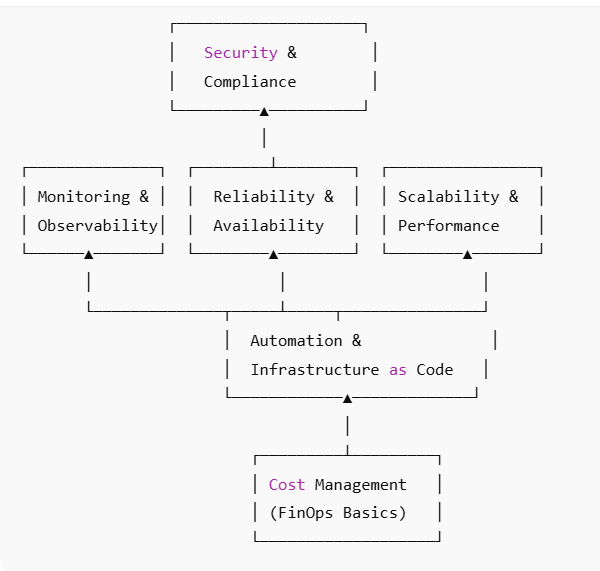
- Monitoring performance and uptime
- Managing costs and scaling
- Ensuring security and reliability
- Automating infrastructure tasks
Cloud Ops focuses on keeping cloud systems running smoothly and efficiently once they’re live.
Why Cloud Computing Matters
Cloud computing has transformed how software is built and delivered.
It allows companies to:
- Launch products faster
- Scale instantly when users increase
- Reduce hardware and maintenance costs
- Improve reliability and uptime
- Support remote and global teams
Most modern apps — from streaming services to AI platforms — are powered by cloud infrastructure.
Common Cloud Services Explained Simply
Cloud platforms usually offer three core types of services:
Compute
Virtual machines and servers that run applications.
Storage
Places to store files, images, videos, and backups.
Networking
Tools that connect systems securely over the internet.
These building blocks are combined to create complete software systems.
Cloud Computing vs Traditional IT
| Traditional IT | Cloud Computing |
|---|---|
| Own physical servers | Rent virtual servers |
| Limited scalability | Scale instantly |
| High upfront cost | Pay as you go |
| Manual maintenance | Automated management |
This shift is why cloud skills are in such high demand today.
Cloud Ops Pillars — Simple Diagram
Do Beginners Need to Learn Cloud Computing?
Yes — but gradually.
You don’t need to master everything at once. Beginners should focus on:
- Understanding basic cloud concepts
- Learning how applications are deployed
- Knowing why cloud architecture matters
Even software engineers who don’t specialize in cloud benefit from understanding how modern systems are hosted and scaled.
Cloud Careers for Beginners
Cloud computing has opened up multiple career paths, including:
- Cloud Engineer
- DevOps Engineer
- Site Reliability Engineer (SRE)
- Platform Engineer
These roles blend software skills with infrastructure and automation knowledge.
Final Thoughts
Cloud computing isn’t magic — it’s a practical way to deliver software reliably, securely, and at scale. Understanding cloud fundamentals gives beginners a strong foundation for modern tech careers, whether you’re interested in development, DevOps, or infrastructure.
To keep learning — from cloud basics to advanced topics like AI — visit https://tooltechsavvy.com/.
Explore the blog to discover AI, software engineering, cloud, DevOps, tools, and other interesting topics designed to help you grow in tech.