Cloud computing skills are in high demand, and if you’re new to tech, you’ve probably encountered the same question again and again:
Should I start with AWS, Azure, or Google Cloud?
All three are powerful, widely used cloud platforms — but they are not equal when it comes to beginner experience, learning curve, and career paths. This guide breaks down the differences clearly so beginners can make a confident choice.
Why This Choice Matters for Beginners
Choosing a cloud platform is not about locking yourself into one forever. It’s about:
- Learning core cloud concepts
- Understanding how modern systems are built
- Building confidence early
Once you understand one cloud platform, switching to another becomes much easier.
What All Three Cloud Platforms Have in Common
Before comparing them, it’s important to know that AWS, Azure, and Google Cloud all offer the same core building blocks:
- Virtual machines (compute)
- Cloud storage
- Databases
- Networking
- Security and identity tools
The differences lie in ecosystem, naming, learning experience, and job market demand.
Amazon Web Services (AWS): The Industry Leader
AWS is the largest and most widely adopted cloud platform.
Why Beginners Choose AWS
- Largest market share
- Massive number of learning resources
- Strong demand in startups and enterprises
- Broad service offerings
Challenges for Beginners
- Can feel overwhelming due to the number of services
- Complex naming conventions
- Steeper learning curve initially
AWS is often recommended for beginners who want maximum job opportunities in the long term.
Microsoft Azure: Enterprise-Friendly and Structured
Azure is deeply integrated with Microsoft’s ecosystem.
Why Beginners Choose Azure
- Familiar tools for those using Windows or Microsoft products
- Strong presence in enterprise environments
- Clear learning paths and certifications
- Good balance between power and structure
Challenges for Beginners
- Less popular in startups compared to AWS
- Some concepts feel enterprise-heavy
Azure is a great choice for beginners interested in corporate IT, enterprise cloud roles, or Microsoft-based environments.
Google Cloud Platform (GCP): Clean and Developer-Friendly
Google Cloud is known for its clean interface and strong data capabilities.
Why Beginners Choose Google Cloud
- Simple and intuitive console
- Strong focus on data, analytics, and AI
- Excellent performance for modern workloads
- Easier initial learning experience
Challenges for Beginners
- Smaller job market compared to AWS and Azure
- Fewer enterprise customers
GCP is ideal for beginners interested in data engineering, machine learning, and cloud-native development.
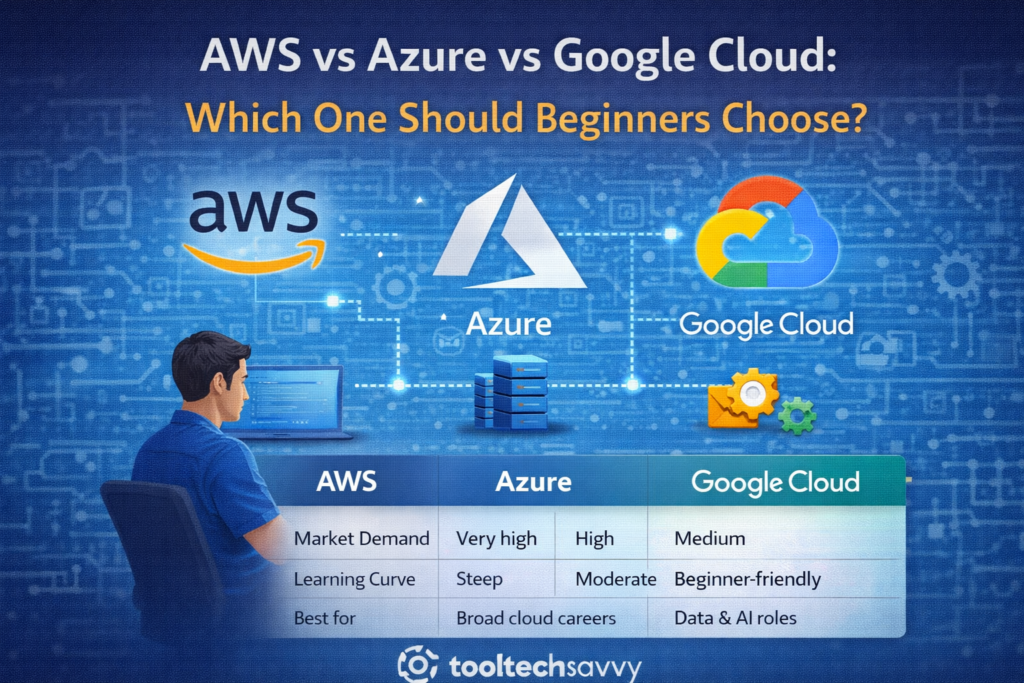
Beginner-Friendly Comparison at a Glance
| Feature | AWS | Azure | Google Cloud |
|---|---|---|---|
| Market demand | Very high | High | Medium |
| Learning curve | Steep | Moderate | Beginner-friendly |
| Best for | Broad cloud careers | Enterprise IT | Data & AI roles |
| UI simplicity | Complex | Structured | Clean & simple |
| Free tier | Yes | Yes | Yes |
So, Which One Should Beginners Choose?
Here’s a simple rule of thumb:
- Choose AWS if you want the widest job opportunities
- Choose Azure if you prefer enterprise environments
- Choose Google Cloud if you want an easier start and love data or AI
There is no wrong choice — only different starting points.
What Beginners Should Focus On (Regardless of Platform)
Instead of worrying about the “best” cloud, beginners should focus on:
- Virtual machines
- Storage concepts
- Networking basics
- Identity and access management
- Deploying a simple application
These fundamentals apply across all platforms.
Can You Switch Later?
Absolutely.
Cloud skills are transferable. Once you understand:
- How cloud resources work
- How systems scale
- How security is managed
Switching platforms becomes a matter of learning new names, not new concepts.
Final Thoughts
AWS, Azure, and Google Cloud are all powerful platforms shaping modern technology. For beginners, the best choice is the one that helps you start learning without fear or confusion.
Pick one, stay consistent, and build small projects. Confidence comes from practice, not perfection.
To continue learning — from cloud fundamentals to advanced topics like AI — visit https://tooltechsavvy.com/.
Explore the blog to dive into AI, software engineering, cloud, DevOps, tools, and other interesting topics designed to help you grow in tech