Beginner Guides

Claude Code for Non-Programmers: Surprisingly Powerful or Overhyped?

Let’s be honest — the name “Claude Code” doesn’t exactly scream “for everyone.” It sounds like something you’d need a computer science degree to touch. A terminal. Black screen. Cryptic commands. The whole intimidating package. But here’s the thing: that assumption is increasingly wrong — and missing it could mean leaving one of the most

Claude Code for Non-Programmers: Surprisingly Powerful or Overhyped? Read More »

The CLAUDE.md File: The Secret to Getting Consistent Results

If you’ve been using Claude Code for a while and wondering why your results feel inconsistent — sometimes brilliant, sometimes off the mark — there’s a good chance you’re missing one thing: the CLAUDE.md file. It’s one of the least talked-about features in Claude Code, yet experienced developers swear by it. Once you understand what

The CLAUDE.md File: The Secret to Getting Consistent Results Read More »

Claude Code Tips: 10 Powerful Tricks Every Beginner Should Know

If you’ve recently started using Claude Code, welcome to the future of software development. It’s powerful, fast, and surprisingly intuitive — but like any tool, there’s a learning curve. After spending serious time with Claude Code, I’ve put together the 10 tips I really wish someone had told me on day one. Let’s dive in.

Claude Code Tips: 10 Powerful Tricks Every Beginner Should Know Read More »

How to Use Claude Cowork Safely: Complete Beginner’s Guide

Claude Cowork is genuinely impressive. It organizes hundreds of files in minutes, synthesizes research documents, builds expense reports from receipt photos, and runs complex multi-step tasks while you do other things. The productivity gains are real, well-documented, and increasingly hard to ignore. But Cowork is also meaningfully different from every AI tool most people have

How to Use Claude Cowork Safely: Complete Beginner’s Guide Read More »

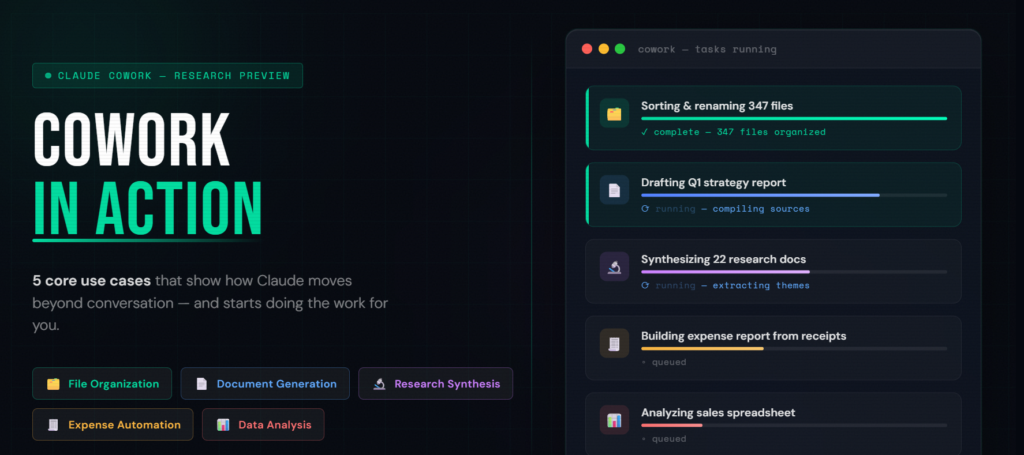
Claude Cowork in Action: 5 Core Use Cases That Will Transform How You Work

Most AI tools are great at telling you what to do. Claude Cowork is different — it actually does it for you. Since Anthropic launched Cowork in January 2026 as a research preview, the response from knowledge workers, researchers, and business professionals has been striking. People aren’t just impressed by the technology; they’re reporting real,

Claude Cowork in Action: 5 Core Use Cases That Will Transform How You Work Read More »

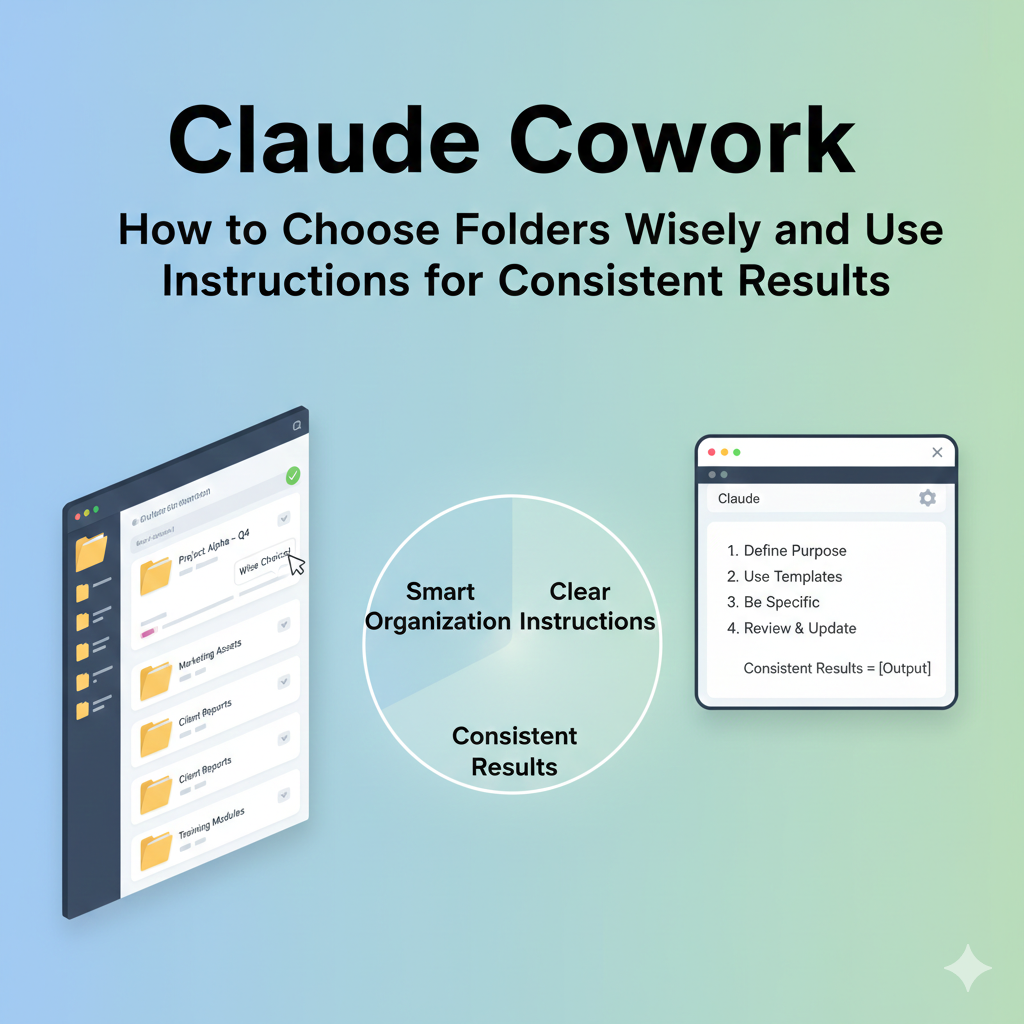
Claude Cowork: How to Choose Folders Wisely and Use Instructions for Consistent Results

If you’ve recently set up Claude Cowork — Anthropic’s powerful AI desktop agent — you’ve probably had one of those moments where the app asks you to select a folder and you think: Wait… which folder should I actually give it? And if you’ve used Cowork more than a few times, you may have noticed

Claude Cowork: How to Choose Folders Wisely and Use Instructions for Consistent Results Read More »

What Is Microsoft Semantic Kernel? Full Introduction for Developers

In the rapidly evolving landscape of AI development, Microsoft has introduced a powerful tool that’s changing how developers build AI-powered applications: Semantic Kernel. This open-source SDK serves as a bridge between traditional programming and the world of large language models (LLMs), making it easier than ever to integrate AI capabilities into your applications. What is

What Is Microsoft Semantic Kernel? Full Introduction for Developers Read More »

What is n8n? A Complete Beginner’s Guide to Self-Hosted Automation

In today’s fast-paced digital world, automation has become essential for businesses and individuals looking to save time, reduce errors, and scale their operations. While many automation tools exist, n8n stands out as a powerful, flexible, and cost-effective solution that puts you in complete control of your workflows. If you’ve been searching for an automation platform

What is n8n? A Complete Beginner’s Guide to Self-Hosted Automation Read More »

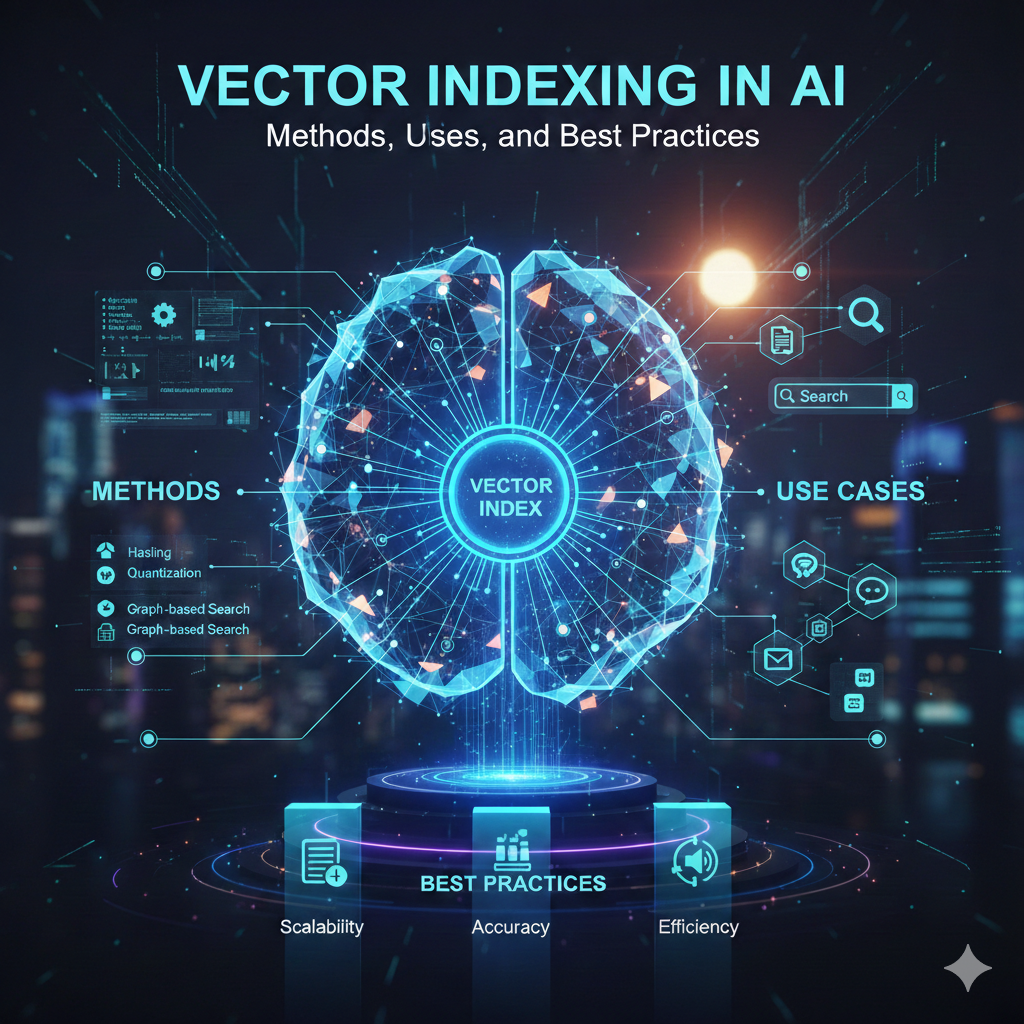
Vector Indexing in AI: Methods, Use Cases, and Best Practices

Modern AI systems don’t just “search” for keywords—they search for meaning. Whether it’s semantic search, recommendation systems, chatbots, or retrieval-augmented generation (RAG), the backbone is the same: vectors. But once you have millions (or billions) of vector embeddings, a simple linear search becomes painfully slow. That’s where vector indexing techniques come in. This post explains

Vector Indexing in AI: Methods, Use Cases, and Best Practices Read More »