How To Guides

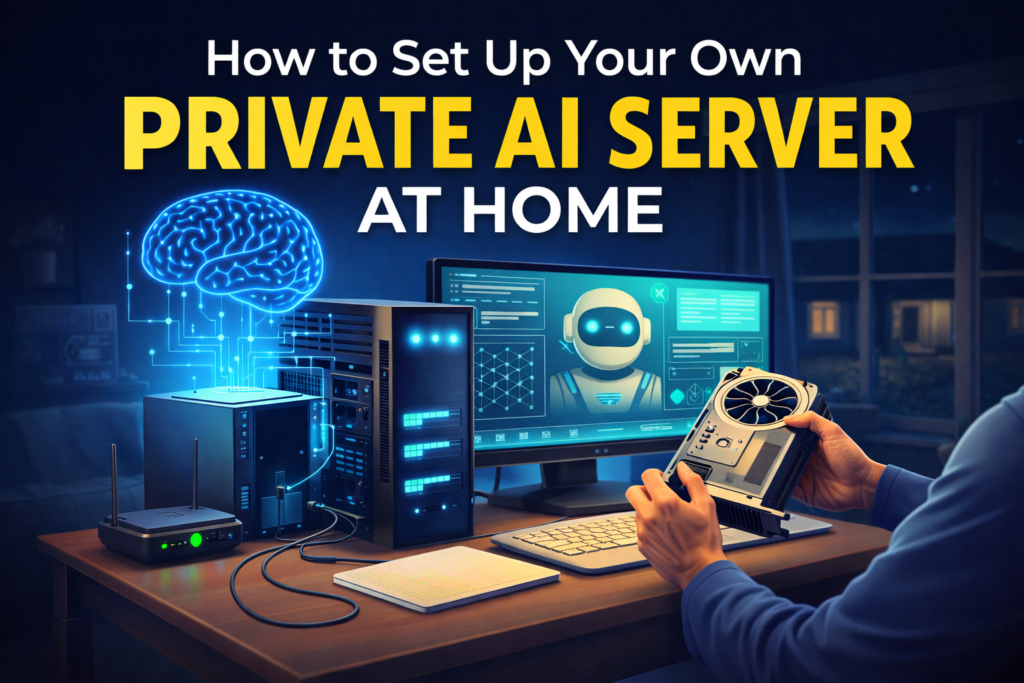
How to Set Up Your Own Private AI Server at Home (Beginner-Friendly Guide)

AI is getting smarter—but it’s also getting more centralized. Every prompt you send to cloud AI tools lives on someone else’s servers. That’s exactly why more creators, developers, and productivity enthusiasts are choosing to run AI locally. Setting up your own private AI server at home gives you full control, better privacy, and long-term cost […]

How to Set Up Your Own Private AI Server at Home (Beginner-Friendly Guide) Read More »

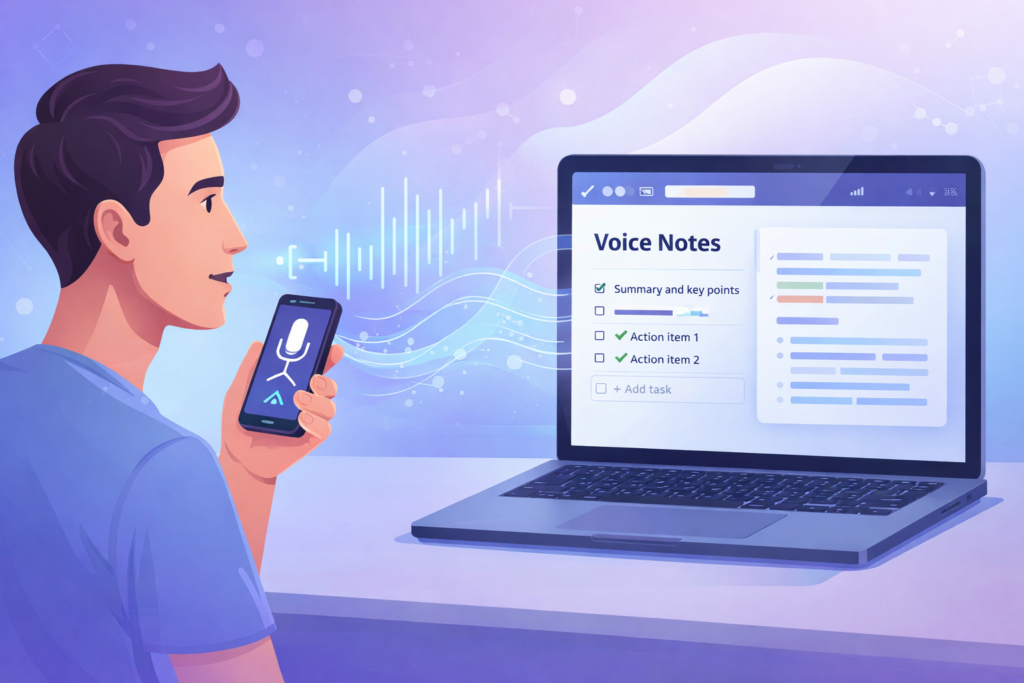
How to Create a Voice-to-Text Note-Taking Tool (No-Code, Step-by-Step)

Ideas don’t wait for keyboards. They arrive while you’re walking, driving, or switching between tasks. Unfortunately, most note-taking tools still expect you to type. The good news? You can create your own voice-to-text note-taking tool without writing a single line of code. Using modern AI tools and simple automation, you can speak your ideas and

How to Create a Voice-to-Text Note-Taking Tool (No-Code, Step-by-Step) Read More »

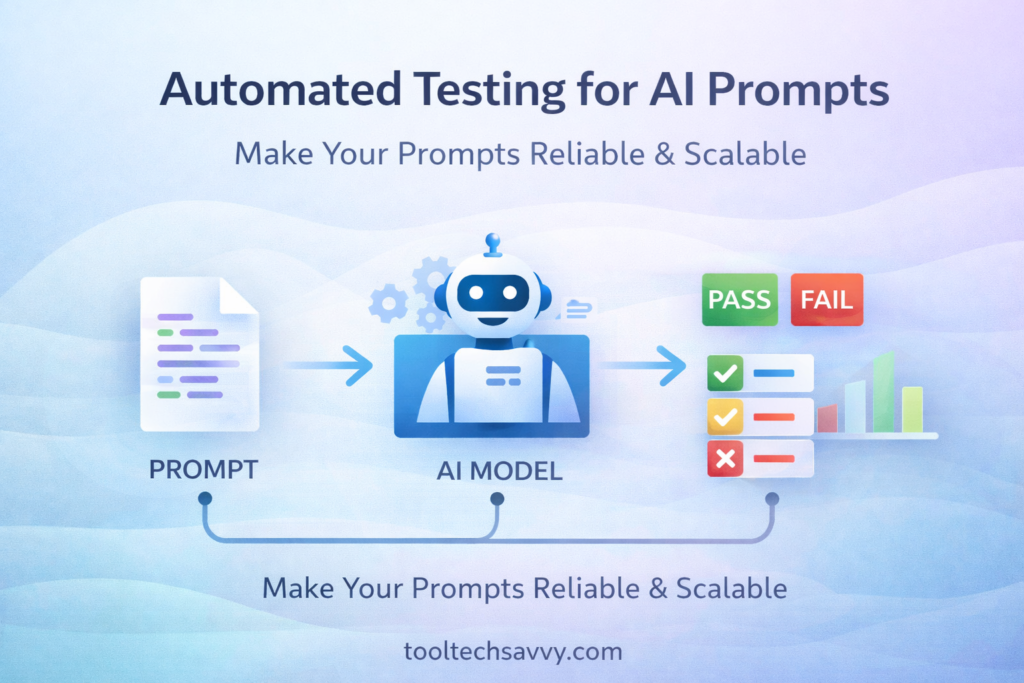
How to Set Up Automated Testing for Your AI Prompts

AI prompts are no longer just experiments—they’re becoming core infrastructure for products, workflows, and automation systems. Yet, while developers rigorously test code, prompts are often shipped without any structured testing at all. That gap creates risk. In this guide, we’ll break down how to set up automated testing for your AI prompts, why it matters,

How to Set Up Automated Testing for Your AI Prompts Read More »

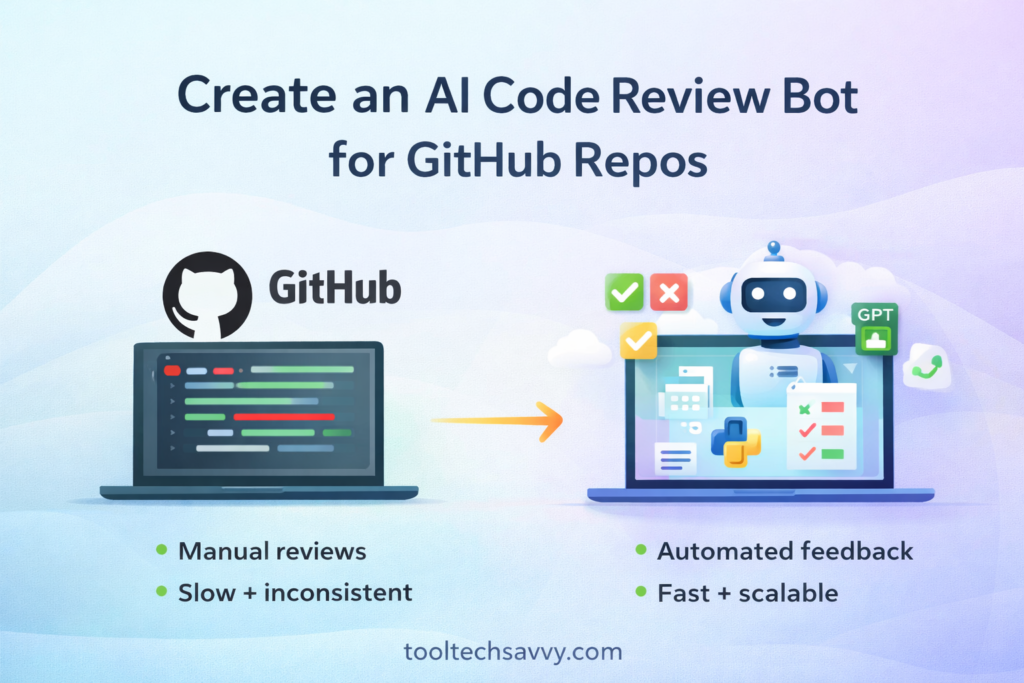
How AI Code Review Bots Work (And How to Build One)

Code reviews are essential—but they’re also time-consuming. As repositories grow and teams move faster, manual reviews often become bottlenecks. That’s exactly why AI-powered code review bots are becoming a must-have for modern development teams. In this guide, we’ll walk through how to create an AI code review bot for your GitHub repositories, what tools you

How AI Code Review Bots Work (And How to Build One) Read More »

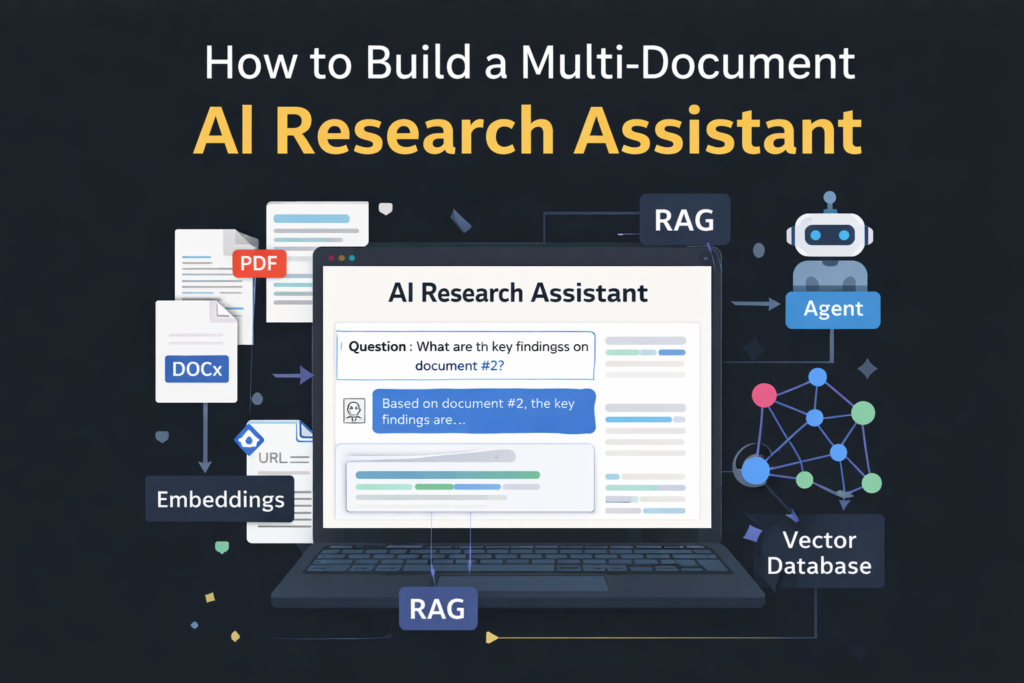
How to Build a Multi-Document Research Assistant (Step-by-Step)

Research today is broken. Information is scattered across PDFs, docs, web pages, and notes—and jumping between them kills focus. As a result, even powerful AI tools often fail when you ask questions across multiple documents. That’s where a multi-document research assistant changes everything. In this guide, you’ll learn how to build an AI assistant that

How to Build a Multi-Document Research Assistant (Step-by-Step) Read More »

How to Build Content Moderation Into Your AI Application

As AI-powered applications become more capable, they also become more responsible. From chatbots and comment systems to AI agents and automation workflows, content moderation is no longer optional—it’s foundational. If your AI app accepts user input or generates text, images, or code, you must think about safety, abuse prevention, and trust from day one. The

How to Build Content Moderation Into Your AI Application Read More »

How to Build an AI-Powered Email Assistant From Scratch (Free & Beginner-Friendly)

If you’ve ever wished you had a personal email assistant—one that sorts, summarizes, drafts, and replies automatically—you’re not alone. Email overload is one of the biggest productivity killers. The good news? With today’s free AI tools, you can build your own AI-powered email assistant from scratch, without coding or spending a single dollar. This guide

How to Build an AI-Powered Email Assistant From Scratch (Free & Beginner-Friendly) Read More »

How to Build a Personal Knowledge Base with Obsidian + AI

Building a personal knowledge base has become essential for managing the overwhelming amount of information we encounter daily. By combining Obsidian’s robust note-taking features with AI capabilities, you can create an intelligent system that not only stores information but actively helps you discover connections and generate insights. Why Obsidian + AI Makes Sense Obsidian excels

How to Build a Personal Knowledge Base with Obsidian + AI Read More »

The Persona Paradox: When Role Prompting Drives Superior AI Performance

Role prompting—instructing an AI to adopt a specific persona like “act as a senior software engineer” or “you are an expert marketing consultant”—has become ubiquitous in the AI community. But does telling an AI to “act as” something actually improve results, or is it just theatrical window dressing? The answer, like most things in AI,

The Persona Paradox: When Role Prompting Drives Superior AI Performance Read More »