In the rapidly evolving landscape of AI development, Microsoft has introduced a powerful tool that’s changing how developers build AI-powered applications: Semantic Kernel. This open-source SDK serves as a bridge between traditional programming and the world of large language models (LLMs), making it easier than ever to integrate AI capabilities into your applications.
What is Semantic Kernel?
Semantic Kernel is an open-source orchestration framework developed by Microsoft that allows developers to combine conventional programming languages with the latest AI services from OpenAI, Azure OpenAI, Hugging Face, and other providers. Think of it as the middleware that connects your code with AI models, enabling you to build intelligent applications without getting lost in the complexity of direct API integration.
At its core, Semantic Kernel provides a unified interface for working with multiple AI services, making your applications more flexible and future-proof. Whether you’re using C#, Python, or Java, Semantic Kernel offers native support to seamlessly integrate AI into your existing tech stack.
Key Components of Semantic Kernel
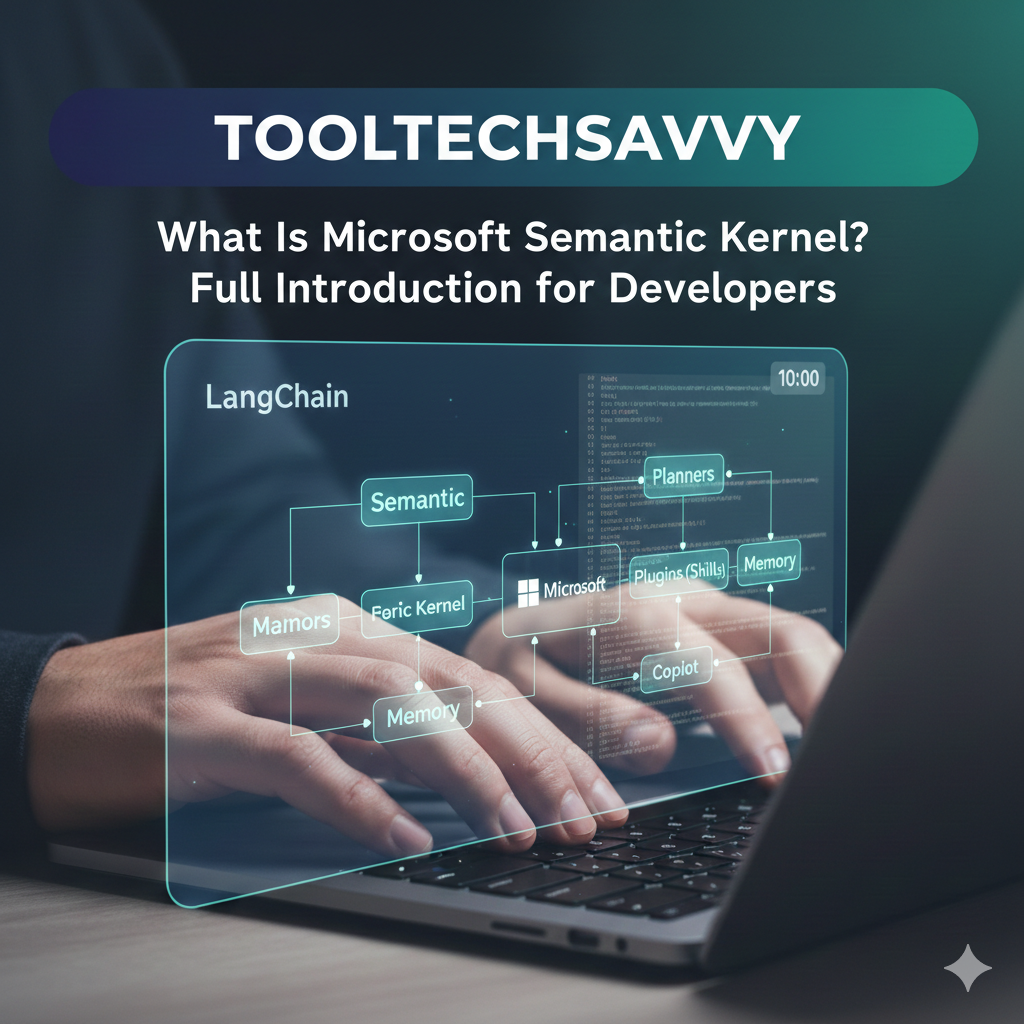
1. Plugins
Plugins are the building blocks of Semantic Kernel. They encapsulate specific functionality that can be called by the AI or your application. Plugins can be:
- Native Functions: Traditional code written in your programming language (C#, Python, Java)
- Semantic Functions: Natural language prompts that the AI interprets and executes
- Connectors: Integrations with external services like databases, APIs, or other tools
This dual nature allows you to combine the reliability of traditional code with the flexibility of AI reasoning.
2. Memory
Semantic Kernel includes a sophisticated memory system that allows your AI applications to store and retrieve information contextually. This isn’t just simple data storage; it’s about creating embeddings and using vector databases to enable semantic search capabilities.
With memory, your applications can:
- Remember previous conversations
- Retrieve relevant information based on meaning, not just keywords
- Build context-aware responses
- Create personalized user experiences
3. Planners
Perhaps the most exciting feature of Semantic Kernel is its ability to automatically create and execute plans. When you give the system a goal, the planner can:
- Break down complex tasks into smaller steps
- Determine which plugins to use and in what order
- Dynamically adjust the plan based on results
- Chain multiple AI calls together to achieve objectives
This transforms simple AI models into agents capable of multi-step reasoning and task completion.
Why Use Semantic Kernel?
Abstraction and Flexibility
Semantic Kernel abstracts away the complexity of working directly with AI APIs. You can switch between different AI models or providers with minimal code changes, protecting your investment and keeping your applications adaptable to new technologies.
Enterprise-Ready
Built with enterprise needs in mind, Semantic Kernel includes:
- Robust error handling and retry logic
- Logging and observability features
- Security best practices
- Production-grade performance optimization
Rapid Development
By providing pre-built components and patterns, Semantic Kernel accelerates the development process. Instead of reinventing the wheel for common AI tasks, you can focus on building unique features for your application.
Getting Started with Semantic Kernel
Here’s a simple example of how you might use Semantic Kernel in C#:
csharp
using Microsoft.SemanticKernel;

// Create a kernel instance
var kernel = Kernel.CreateBuilder()
    .AddOpenAIChatCompletion("gpt-4", "your-api-key")
    .Build();

// Define a semantic function
var summarize = kernel.CreateFunctionFromPrompt(
    "Summarize the following text in 2-3 sentences: {{$input}}"
);

// Execute the function
var result = await kernel.InvokeAsync(summarize,
    new() { ["input"] = "Your long text here..." });

Console.WriteLine(result);
This simple example demonstrates how Semantic Kernel makes AI integration straightforward and readable.
Use Cases for Semantic Kernel
Semantic Kernel is versatile enough to power various applications:
- Chatbots and Virtual Assistants: Create conversational AI that can perform actions, not just chat
- Document Processing: Automatically extract, summarize, and analyze documents
- Workflow Automation: Build intelligent systems that can plan and execute complex business processes
- Content Generation: Create marketing copy, reports, or creative content with AI assistance
- Data Analysis: Use natural language to query and understand your data
- Customer Support: Develop AI agents that can understand issues and provide solutions
Best Practices
When working with Semantic Kernel, keep these tips in mind:
- Start Small: Begin with simple plugins and gradually build complexity
- Test Thoroughly: AI responses can be unpredictable; comprehensive testing is essential
- Monitor Usage: Keep track of token consumption and API costs
- Version Your Prompts: Treat semantic functions like code and maintain version control
- Design for Failure: AI calls can fail or return unexpected results; build resilient error handling
The Future of AI Development
Semantic Kernel represents a significant shift in how we build AI applications. Rather than treating AI as a separate component that requires specialized knowledge, it integrates naturally into the development workflow. As LLMs become more powerful and accessible, frameworks like Semantic Kernel will be essential for developers who want to harness this technology effectively.
Microsoft continues to actively develop and expand Semantic Kernel, with new features and improvements released regularly. The framework’s open-source nature means a growing community of developers is contributing plugins, patterns, and best practices.
Conclusion
Microsoft’s Semantic Kernel is more than just another SDK; it’s a paradigm shift in AI application development. By providing a clean, consistent interface for working with AI models, it empowers developers to build sophisticated intelligent applications without becoming AI experts. Whether you’re adding a simple AI feature to an existing app or building a complex autonomous agent, Semantic Kernel provides the tools and abstractions you need to succeed.
The combination of traditional programming, AI reasoning, and autonomous planning capabilities makes Semantic Kernel a powerful foundation for the next generation of intelligent applications. As we move further into the AI era, frameworks like this will become indispensable tools in every developer’s toolkit.
Want to learn more about AI, development tools, and cutting-edge technology? Visit my blog at https://tooltechsavvy.com/ where I regularly share insights, tutorials, and deep dives into the latest trends in AI and technology. Whether you’re a beginner or an experienced developer, you’ll find valuable content to help you stay ahead in the fast-paced world of tech!