Cursor took the developer world by storm as an AI-powered code editor. But here’s a question no one’s asking loudly enough: what if you’re not a developer? Can a product manager or designer actually get meaningful value out of Cursor — or is it just another shiny tool that belongs squarely in engineering’s toolbox?
Spoiler: it’s more useful than you’d expect. But it requires the right mindset — and some honest caveats.
What is Cursor, exactly?
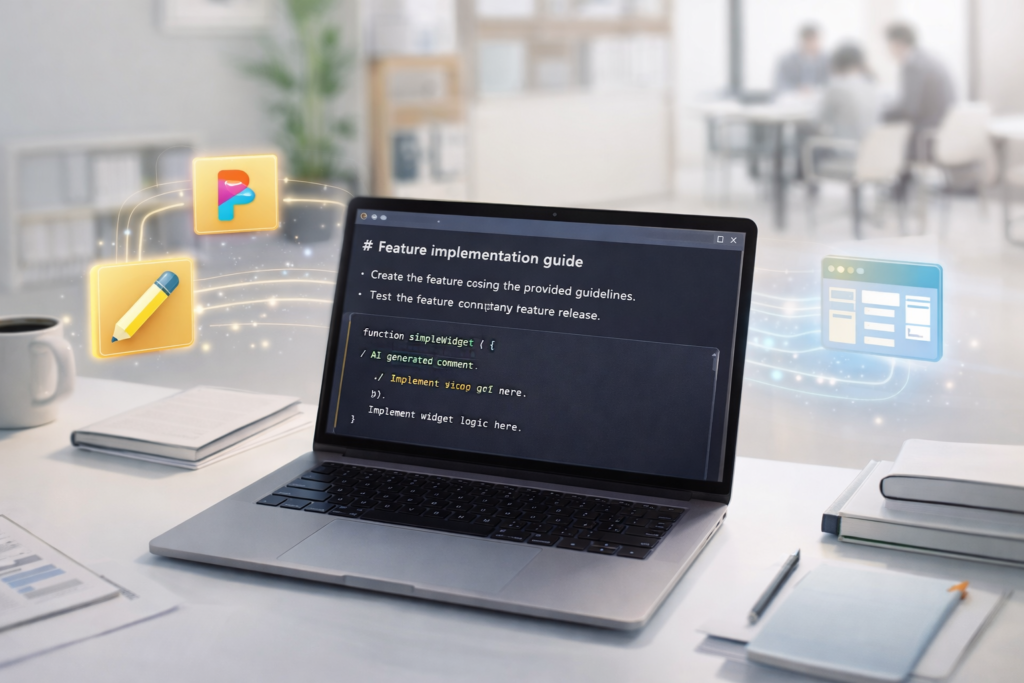
Cursor is an AI-first code editor built on top of VS Code. It lets you write, edit, and refactor code using natural language. You can ask it to build a feature, explain a codebase, or generate a script — all inside a familiar IDE interface. Developers love it because it dramatically accelerates coding. But the magic ingredient — an AI that understands context and executes on instructions — doesn’t require you to be a coding wizard to appreciate.
Where PMs can actually use it
Product managers live in a world of specs, data, and cross-functional translation. Cursor can step into several of those spaces in surprisingly useful ways.
Prototype logic
Describe a flow in plain English and have Cursor scaffold a quick prototype or logic tree without writing a single line yourself.
Data scripts
Need a quick Python script to process CSV data or automate a report? Cursor can generate it from your plain-English description.
Codebase comprehension
Ask Cursor to explain what a piece of code does — incredibly useful before writing a spec or when debugging with engineering.
Where designers can actually use it
Designers who work with front-end or who bridge into no-code/low-code territory will find Cursor especially compelling. Even those who’ve never touched code can leverage it — with a little patience.
HTML/CSS tweaks
Describe the visual change you want in plain language. Cursor generates the CSS. No more Googling flexbox syntax for 20 minutes.
Interactive prototypes
Build clickable HTML prototypes that go beyond Figma — real interactions, real state, without needing a developer to hand things off.
Dev collaboration
Use Cursor to read and understand the existing front-end code before handing off designs, reducing implementation surprises.
What makes Cursor different from ChatGPT for this use case?
You might wonder: can’t I just use ChatGPT for all of this? The answer is yes — but Cursor has one key advantage: context. Cursor reads your entire project. It knows the files, the structure, the dependencies. So when you ask it to “add a search bar to the homepage,” it actually understands your homepage exists and what’s in it. ChatGPT is working blind. That context gap matters enormously for anything beyond a trivial one-off task.
Context-awareness is Cursor’s superpower. It doesn’t just generate code — it understands your project’s structure and responds accordingly. That’s the gap between “generic AI help” and “AI that actually helps with your work.”
The real limitations to be honest about
- The learning curve is real. Cursor is built for developers first. The interface assumes familiarity with IDEs, terminals, and version control. Non-developers will need to invest time getting comfortable.
- Debugging can spiral. Without coding knowledge, when Cursor’s output doesn’t work, it can be hard to diagnose why — or know when to stop iterating.
- It’s not magic automation. You still need to think critically about what you’re asking for and validate the output. Cursor writes plausible code; it doesn’t always write correct code.
- There’s a cost. The Pro plan is needed for most useful AI features. Worth it for power users, but worth evaluating first.
The verdict
Cursor isn’t replacing your developer, and it’s not a no-code tool. But for PMs and designers who are curious, technically adjacent, or just willing to learn — it unlocks a real capability gap.
Think of it as a force multiplier for people who speak the language of products but aren’t fluent in code. You won’t ship production software alone. But you’ll ship faster, collaborate better, and stop hitting walls where you previously had to wait on engineering.
Want more tool breakdowns like this?
ToolTechSavvy covers the best AI and productivity tools for modern teams — with honest, practical takes. Explore the full blog for in-depth guides, comparisons, and tutorials.