
Must Read

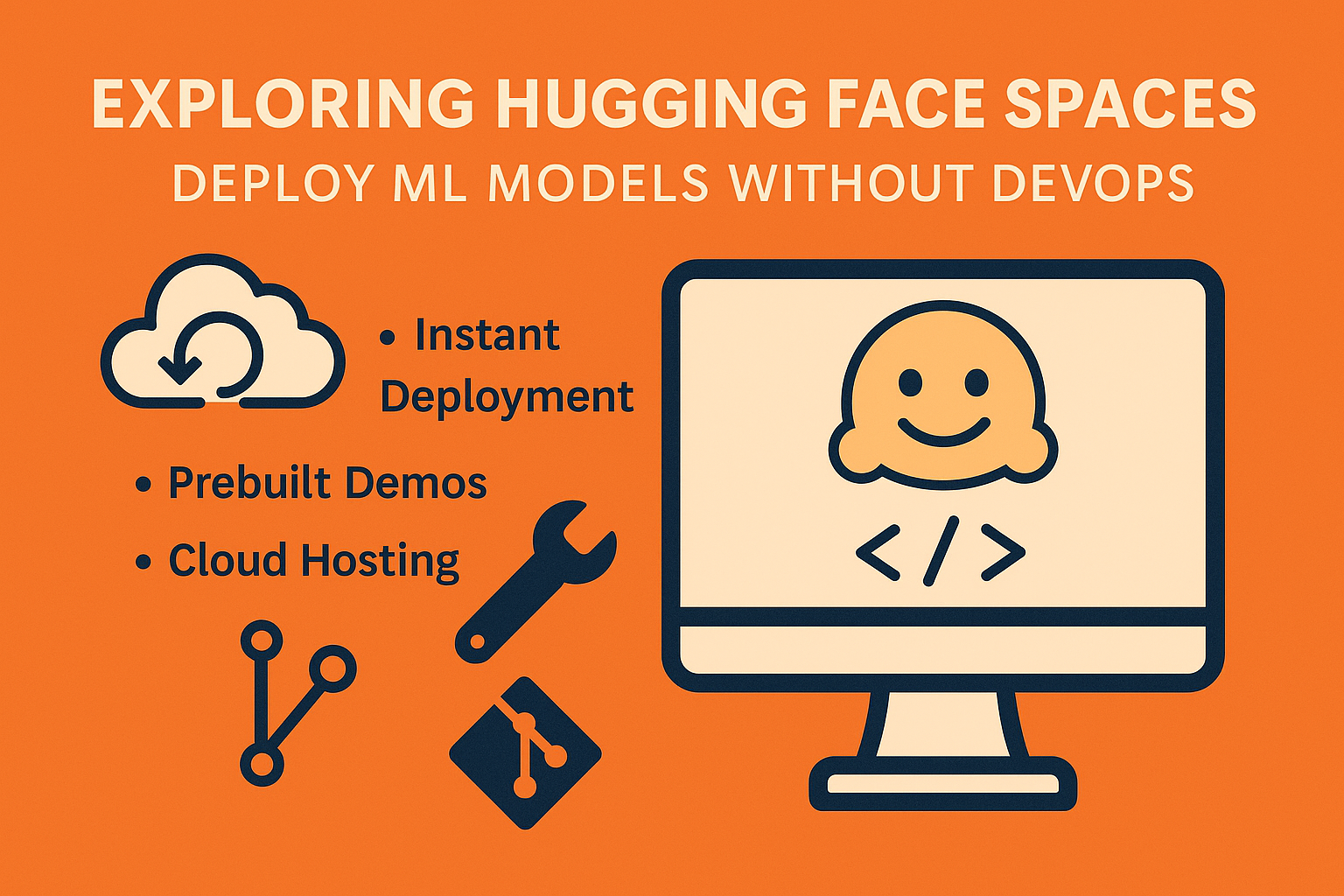
Hugging Face Spaces Tutorial: ML Deployment Made Simple

Deploying machine learning (ML) models used to mean wrestling with servers, Docker files, and DevOps pipelines. But with Hugging Face Spaces, that complexity disappears. You can now deploy, demo, and share your ML projects instantly—all from your browser. If you’ve ever wished for a simpler way to showcase your model, this platform might be your […]

Hugging Face Spaces Tutorial: ML Deployment Made Simple Read More »

Embracing Failure in Machine Learning: A Practical Guide

In the world of machine learning (ML), failure is not just inevitable—it’s essential. Every time a model breaks, it gives you valuable data about its limits, your assumptions, and the nature of the problem itself. Yet many developers still treat model failure as something to avoid. The truth is, your models should break—because that’s how

Embracing Failure in Machine Learning: A Practical Guide Read More »

Prompt Optimization: Iterating Your Way to 10x Better Results

If you’ve ever used AI tools, you know the difference between a mediocre prompt and a masterpiece is massive.That’s where prompt optimization comes in — the art and science of iterating your prompts until you unlock 10x better results. In this guide, you’ll learn how to refine, test, and iterate your way to expert-level performance

Prompt Optimization: Iterating Your Way to 10x Better Results Read More »

Small Language Models (SLMs): When Bigger Isn’t Better

For years, the AI race was about one thing — size. Every new release promised more parameters, longer context windows, and bigger performance leaps. But in 2025, that narrative is starting to change. Enter Small Language Models (SLMs) — lightweight, efficient, and increasingly powerful. These models challenge the “bigger is better” mindset by offering speed,

Small Language Models (SLMs): When Bigger Isn’t Better Read More »

Understanding Context Windows: Why ChatGPT ‘Forgets’ Things

If you’ve ever chatted with ChatGPT and thought, “Wait, didn’t I already explain that?” — you’re not alone.The reason isn’t that the model is being careless. It’s because of something called a context window — a built-in limit on how much the AI can “remember” during a conversation. In this post, we’ll break down what

Understanding Context Windows: Why ChatGPT ‘Forgets’ Things Read More »

Cursor vs GitHub Copilot: Which AI Code Assistant Is Better for Developers in 2025?

AI has changed how developers write code — forever. Whether you’re a beginner or an advanced coder, tools like GitHub Copilot and Cursor have made AI a daily part of programming. However, as more developers ask “Which one should I use?”, it’s time to compare them head-to-head — Cursor vs GitHub Copilot — and see

Cursor vs GitHub Copilot: Which AI Code Assistant Is Better for Developers in 2025? Read More »

The 80/20 Rule in AI Learning: Focus on What Actually Matters

If you’ve ever tried learning AI, you’ve probably felt overwhelmed — new tools, endless updates, and thousands of tutorials. The truth? You don’t need to learn everything. The 80/20 rule, also known as the Pareto Principle, teaches that 20% of your efforts create 80% of your results. Applied to AI learning, this means focusing on

The 80/20 Rule in AI Learning: Focus on What Actually Matters Read More »

Zero-Shot vs. Few-Shot: Real-World Performance Benchmarks for LLMs

Prompting is the art — and increasingly, the science — of getting AI models like ChatGPT or Claude to produce better outputs. In 2025, as models become smarter and more multimodal, knowing how to prompt remains a competitive advantage. Whether you’re building an AI workflow or experimenting with local LLMs, understanding few-shot vs zero-shot prompting

Zero-Shot vs. Few-Shot: Real-World Performance Benchmarks for LLMs Read More »