
Must Read

Privacy-First AI Tools: The Best Alternatives That Keep Your Data Local

For years, convenience has won the battle against privacy. We upload documents, prompts, and personal ideas into cloud-based AI tools—and hope for the best. However, that mindset is changing. As AI adoption accelerates, privacy-first AI tools are emerging as powerful alternatives that keep your data local, offline, or fully under your control. Instead of shipping […]

Privacy-First AI Tools: The Best Alternatives That Keep Your Data Local Read More »
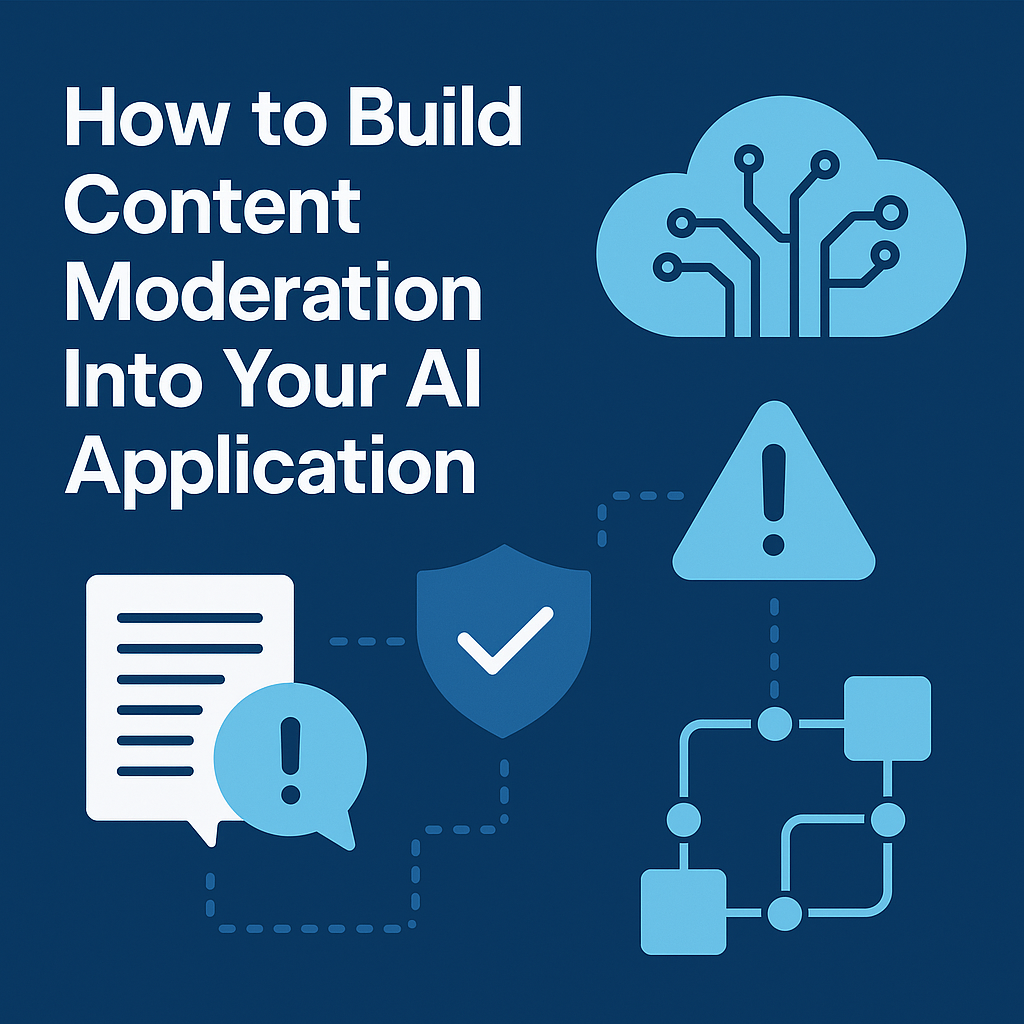
How to Build Content Moderation Into Your AI Application

As AI-powered applications become more capable, they also become more responsible. From chatbots and comment systems to AI agents and automation workflows, content moderation is no longer optional—it’s foundational. If your AI app accepts user input or generates text, images, or code, you must think about safety, abuse prevention, and trust from day one. The

How to Build Content Moderation Into Your AI Application Read More »

Auditing Your AI Outputs: Building a Quality Control Process

As AI becomes central to everyday workflows, creators, professionals, and teams are discovering a hard truth: AI doesn’t guarantee accuracy — you do.Whether you’re generating content, coding, summarizing reports, or building automations, you need a repeatable audit process to review and validate AI outputs before they go live. This article breaks down how to build

Auditing Your AI Outputs: Building a Quality Control Process Read More »

Training AI to Be Safe: Inside RLHF and Constitutional AI

Modern AI models seem incredibly capable — they answer questions, write essays, generate code, and act as creative partners. But beneath that smooth interaction lies a much harder challenge: teaching AI systems how to behave safely. Two of the most important alignment strategies used today are RLHF (Reinforcement Learning from Human Feedback) and Constitutional AI.

Training AI to Be Safe: Inside RLHF and Constitutional AI Read More »

Data Privacy 101: What Happens to Your Prompts and Conversations?

As AI assistants become part of our daily workflows—from writing and research to coding and business automation—a new concern rises to the surface: What actually happens to the prompts we type and the conversations we have with AI models? This is a foundational question for anyone using AI tools for personal writing, sensitive tasks, business

Data Privacy 101: What Happens to Your Prompts and Conversations? Read More »

AI Guardrails Explained: NeMo Guardrails, Guardrails AI & the Future of Safer AI

As AI systems become more autonomous and embedded in everyday workflows, the need for robust guardrails has never been more urgent. Whether you’re deploying chatbots, building agentic workflows, or automating tasks with LLMs, safety frameworks ensure your AI behaves predictably, avoids harmful outputs, and stays aligned with user intent. This is why AI guardrail platforms

AI Guardrails Explained: NeMo Guardrails, Guardrails AI & the Future of Safer AI Read More »

The Responsibility Mindset: You’re Still Accountable for AI Outputs

AI tools have transformed how we write, code, research, and create. But as LLMs become deeply embedded in our workflows, one truth becomes impossible to ignore: you are still responsible for everything your AI produces.This shift—from passive user to accountable operator—is what I call The Responsibility Mindset. It’s not enough to rely on models for

The Responsibility Mindset: You’re Still Accountable for AI Outputs Read More »

Jailbreak Prevention: Designing Prompts with Built-In Safety

Large Language Models (LLMs) are powerful—sometimes too powerful when users intentionally (or accidentally) push them outside intended boundaries. This is where jailbreak prevention becomes essential. Instead of relying only on external filters, we can design prompts with built-in safety that reduce risk, strengthen model alignment, and improve reliability. As AI becomes more embedded in workflows—from

Jailbreak Prevention: Designing Prompts with Built-In Safety Read More »

How Security Researchers Red Team AI: A Guide to Model Testing

As AI systems become more capable—and more deeply integrated into search, automation, education, and enterprise workflows—AI safety and security testing have become critical priorities. One method stands out as the backbone of model evaluation: red teaming. Inspired by cybersecurity and military strategy, red teaming involves deliberately pushing AI systems to their limits—finding weaknesses before real-world

How Security Researchers Red Team AI: A Guide to Model Testing Read More »

Understanding AI Hallucinations: Why AI Makes Things Up

As AI systems become part of everything—from writing tools to search engines—one concern keeps resurfacing: AI hallucinations. These moments when an AI confidently generates false information aren’t just technical glitches; they reveal how large language models (LLMs) actually work under the hood. For creators, developers, and everyday users, understanding hallucinations isn’t optional. It’s the difference

Understanding AI Hallucinations: Why AI Makes Things Up Read More »